


Most guidance on this is written by people trying to sell you equipment, which is why it tends to describe an elaborate routine.
The evidence points the other way. The main risk in anal preparation is doing too much of it, because the tissue you are cleaning is more fragile than the tissue you are used to cleaning, and damaging it is what raises infection risk.
In this article
- What you are actually working with
- Do you need to douche at all?
- Diet does more than douching
- If you do douche: the rules
- How often is too often
- Lubricant is not optional
- Going slowly, and why it is physical rather than mental
- Afterwards
- Frequently asked questions
What you are actually working with
The rectum is lined with rectal mucosa, a thin mucous membrane. It is not skin. It has no natural lubrication of its own the way the vagina does, and it is considerably more fragile.
That single fact drives everything below. Preparation is about not damaging that lining, and most of what goes wrong is a result of trying too hard to get it clean.
Do you need to douche at all?
Often, no.
The rectum is not a storage chamber. Under normal circumstances it is largely empty between bowel movements. If you have had a bowel movement a couple of hours before and you are eating reasonably, there is frequently nothing to clean out.
A shower and external washing is enough for many people, much of the time.
The anxiety driving elaborate preparation is understandable and it is usually disproportionate. Some mess is possible. It is not a catastrophe and it is not a hygiene failure.
Diet does more than douching
Under-discussed and considerably more effective.
Fibre and hydration produce stool that is formed and passes cleanly, which means less residue and less need for anything else.
In the day before, most people find it helps to go lighter on very spicy food, on a lot of dairy if you are sensitive, and on large amounts of alcohol, all of which loosen stool.
Timing beats cleaning. A bowel movement one to two hours beforehand does more than any device.
If you do douche: the rules
Each one has a reason behind it.
Use saline, not plain tap water. The safest liquid is saline, which you can buy as a prepared enema or make with a cup of water and half a teaspoon of salt. Frequently using plain tap water may cause an electrolyte imbalance, which can affect the proper functioning of the rectum, intestine and colon.
Below lukewarm. The water should be at a safe temperature for sensitive intestine and colon tissue, which means cooler than you would think. Hot water damages mucosa.
Small volumes. You are rinsing the lower rectum, not irrigating the colon. A bulb, not a bag.
Gently, and shallow. Insert only a short distance, with lubricant on the nozzle. Force is what causes injury.
Stop when the water runs clear. Usually one to three repeats. Continuing past that is reaching higher than you need to.
Wait afterwards. Give it fifteen to thirty minutes so retained water comes out before rather than during.
Clean the equipment before and after, with warm water and a proper cleaner rather than soap.
How often is too often
The most important section, and the one usually missing.
Anal douching too often can damage the intestinal lining and increase the risk of infection, even when a person uses appropriate equipment and liquid. Guidance is to limit it to once a day at most, or two to three days a week.
The mechanism is direct. Douching may injure the rectal mucosa, and studies indicate that douching can raise the risk of HIV and other sexually transmitted infections, including hepatitis B, hepatitis C, chlamydia, gonorrhoea, syphilis and HPV. When the lining is damaged, infections pass more easily.
Worth stating fairly: more long-term studies are needed to clarify the association between anal douching and infection risk. The mechanism is well described and the exact size of the effect is still being established.
The practical conclusion is the same either way. Less is safer. Douching before every encounter, or multiple times per session, works against you.
Lubricant is not optional
The rectum produces no lubrication of its own. None. This is the single biggest difference from vaginal sex and the one most often underestimated.
Use more than you think, and reapply. Running dry mid-way is how tearing happens, and tears in mucosa are exactly the entry points discussed above.
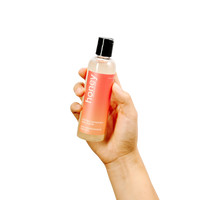
A generous water-based lubricant is the reliable default. Water-based is compatible with latex condoms and with silicone toys. Oil-based degrades latex and is harder to clean from the body afterwards.
Reapply rather than pushing through friction. Friction is the signal to add more, not to continue.
Going slowly, and why it is physical rather than mental
There are two sphincters. The external one is under voluntary control. The internal one is not, and it responds to relaxation rather than to intention.
This is why "just relax" is useless advice and why time actually works. The internal sphincter releases when the body is not braced, and that takes minutes rather than seconds.
Start externally. Touch, pressure, no penetration, until things soften.
Then small, then wait. Insert and stop. Let the body adjust before moving.
Pain is a stop signal. Discomfort or pressure can be worked with. Sharp pain means stop, and pushing through it is how injury happens.
A smaller graduated set is a reasonable way to learn what your body does before anything larger is involved.
Afterwards
Do not clean aggressively. Warm water externally. No soap, no wipes, no antiseptic on tissue that has just been through friction.
Expect some soreness, and expect it to settle within a day.
Get seen for: bleeding that is more than a streak, pain lasting beyond a day, difficulty controlling wind or stool, fever, or any discharge.
Do not move from anal to vaginal without changing condoms or washing thoroughly. Rectal bacteria in the vagina is a straightforward route to a bacterial shift or a urinary tract infection.
Related reading
- How to clean an enema bulb properly
- Butt plug sizes for beginners: how to choose
- Desensitizing spray without numbing: how it differs
Frequently asked questions
Do you have to douche before anal sex?
Often not. The rectum is largely empty between bowel movements, so a bowel movement an hour or two beforehand plus external washing is enough for many people. Douching carries real risks, so the case for doing it should be considered rather than automatic.
What is the safest liquid to douche with?
Saline, either a prepared enema or a cup of water with half a teaspoon of salt. Plain tap water used frequently may cause an electrolyte imbalance that affects the functioning of the rectum, intestine and colon. Water should be below lukewarm.
How often is it safe to douche?
At most once a day, and guidance suggests two to three days a week as a reasonable limit. Douching too often can damage the intestinal lining and increase infection risk even with correct equipment and liquid.
Can douching increase the risk of infection?
Yes. Douching may injure the rectal mucosa, and studies show it can increase the risk of HIV and other sexually transmitted infections including hepatitis B and C, chlamydia, gonorrhoea, syphilis and HPV. Long-term studies are still clarifying the size of the effect.
Why does anal need so much lubricant?
Because the rectum produces none of its own, unlike the vagina. Without adequate lubricant, friction causes microtears in a mucous membrane that is already fragile, which is both painful and the mechanism by which infections enter.
Is bleeding after anal sex normal?
A small streak can happen and should stop quickly. More than that, or bleeding that recurs, or pain lasting beyond a day, warrants being seen. Persistent bleeding is never something to assume is just part of it.
Sources
- Anal douching benefits, risks and technique: Medical News Today
- Anal douching safety guidance: San Francisco AIDS Foundation
- Rectal douching practices associated with anal intercourse: PMC6510640