


Before anything else, the honest position on the evidence, because most articles on this skip it.
The research on vaginal weights is mixed. One study found weighted balls produced significantly better reduction in urinary leakage after four months than pelvic floor exercises alone. Other reviews conclude that adding weights to pelvic floor muscle training does not consistently produce meaningful outcomes beyond training on its own.
So anyone telling you weights are definitively better than exercises is overstating it.
The strong argument is different and it is about feedback, which is what the rest of this article is about.
In this article
- The problem weights actually solve
- What the evidence does and does not support
- Who should not use them
- How to start
- Building up
- How to know it is working
- Common mistakes
- Cleaning and care
- Frequently asked questions
The problem weights actually solve
Here is the statistic that reframes this entire category: 25 to 50% of women cannot correctly activate their pelvic floor when asked to.
Not "do it weakly". Cannot do it. Many bear down instead of lifting, which is the opposite movement and actively unhelpful. Others squeeze glutes or thighs and feel something happening.
Kegels are first-line treatment and they are effective only when performed correctly. Which means somewhere between a quarter and a half of the women diligently doing them are getting nothing, and have no way of knowing.
That is what a weight fixes. The weight provides feedback that encourages the muscles to contract so it does not slip, and it gives you an unambiguous signal: either you are holding it or you are not. You cannot fake that with your glutes.
Feedback, not resistance, is the defensible reason to use one.
What the evidence does and does not support
Being precise, because this is a health product.
Supported: vaginal weights have been used for assessment and training of the pelvic floor in clinical settings for decades. They may be an effective training aid for women with mild to moderate stress incontinence, particularly in the absence of severe pelvic organ prolapse. One trial found significantly better reduction of leakage at four months versus exercises alone.
Not supported: that weights outperform pelvic floor muscle training generally. Reviews are inconsistent on whether adding them changes outcomes, and one conclusion in the literature is that it does not much matter what you use for active pelvic floor exercise.
The reasonable read: a weight is a training aid that solves a specific and very common problem, which is not knowing whether you are doing it right. If you can already reliably contract, hold and release, a weight adds progressive resistance and convenience rather than a different result.
Who should not use them
Genuinely important, and it is why this section sits before the instructions.
Do not start with weights if you have:
- An overactive pelvic floor, meaning pain with sex, difficulty emptying, or a floor that will not release. Adding load to a muscle that cannot relax makes it worse. The distinction is explained in what pelvic floor dysfunction feels like.
- Severe pelvic organ prolapse. Get assessed first.
- An active infection of any kind.
- Recently given birth. Wait for your postnatal check and clearance, and see pelvic floor after birth.
- An IUD recently fitted, or any recent pelvic surgery.
- Pain when you insert one. Pain is a stop signal, not something to push through.
If you do not know which category you are in, that is an argument for an assessment with a pelvic floor physiotherapist rather than a reason to guess.
How to start
Start with the lightest weight, not the one that feels like a challenge. The point is holding it correctly, not struggling.
Empty your bladder first.
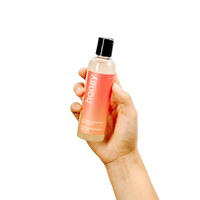
Use a small amount of water-based lubricant. Not oil-based, which degrades some materials and is harder to clean off. A water-based lubricant is the right choice.
Insert while lying down or with one foot raised, whichever is easier. It should sit comfortably, similar to a tampon. You should not feel it once it is in place.
Start with five minutes, standing or walking gently. Not exercising, not running errands. Five minutes.
Then remove it. Bear down gently and use the retrieval loop.
Do this once a day. Muscle needs recovery like any other muscle, and more is not faster.
And keep doing Kegels without it. The weight is a training aid, not a replacement for learning the contraction.
Building up
Weeks one to two: five minutes daily with the lightest weight, standing still.
Weeks three to four: build toward ten to fifteen minutes, adding gentle walking.
Weeks five to eight: fifteen to twenty minutes, and add active contractions while it is in, ten holds of ten seconds.
Beyond: only move to a heavier weight when the current one is genuinely effortless for twenty minutes with movement.
Twenty minutes a day is enough. There is no benefit to wearing one all day and there is a real risk of fatiguing a muscle group into the overactive state you are trying to avoid.
How to know it is working
Give it three months. Muscle adaptation takes months, and three months of consistent correct training is a fair point to judge.
Signs of progress:
- The lightest weight becomes effortless and you barely notice it
- You can hold longer without conscious effort
- Fewer leaks with coughing, sneezing or exercise
- Better sensation during sex
- Less heaviness by the end of the day
Signs to stop and get assessed:
- Pain during or after use
- New urgency or difficulty emptying
- Increased tension or an inability to relax
- Nothing has changed after three consistent months
That last one matters. Three months of nothing usually means the technique is wrong or the diagnosis is, and continuing harder fixes neither.
Common mistakes
Bearing down instead of lifting. The single most common error. The movement is a lift up and forward, not a push down.
Recruiting the wrong muscles. If your glutes, thighs or abdomen are clenching, the pelvic floor is probably not doing the work.
Holding your breath. You should be able to breathe normally throughout. Breath-holding usually means you are bracing rather than contracting.
Starting too heavy. A weight you have to fight is a weight you are compensating for.
Wearing it too long. Fatigued muscle does not get stronger, it gets tighter.
Skipping the release. Every contraction needs a full relaxation. Only training the squeeze is how a weak floor becomes a tight one.
Cleaning and care
Wash before and after every use with warm water and a dedicated cleaner rather than ordinary soap, which is alkaline against skin that is not.
Dry completely before storing. Store in a breathable pouch, not sealed plastic.
Check the retrieval cord for wear before each use, and replace the set if the surface is damaged, since a compromised surface is harder to clean properly.
Frequently asked questions
Do kegel balls actually work?
The evidence is mixed. One study found weighted balls significantly better than exercises alone at four months, while other reviews find adding weights does not consistently improve outcomes over training by itself. Their clearest value is feedback, since 25 to 50% of women cannot correctly activate the pelvic floor without it.
How long should I wear kegel balls each day?
Fifteen to twenty minutes is enough once you have built up, starting at five. Wearing them all day fatigues the muscle rather than strengthening it, and a fatigued pelvic floor can become overactive, which causes a different set of problems.
Can kegel balls make things worse?
Yes, in specific cases. If your pelvic floor is overactive rather than weak, adding load makes the tension worse and can increase pain and difficulty emptying. This is why establishing which problem you have comes before buying anything.
How long until I see results?
Give it three months of consistent use. Muscle adaptation is measured in months. If nothing has changed after three consistent months, the likeliest explanation is incorrect technique or the wrong diagnosis, and an assessment will tell you which.
Can I use them after having a baby?
Not until you have had your postnatal check and been cleared. Pelvic floor muscles can stretch up to 250% of their resting length during labour, and recovery follows its own timeline. Starting resistance work too early works against it.
What lubricant should I use?
Water-based. Oil-based lubricants degrade some materials and are harder to remove fully, which matters for something that goes back in your body. Use a small amount, since the point is comfortable insertion rather than making it slippery.
Sources
- Correct pelvic floor activation rates and Kegel effectiveness: PMC9266083
- Vaginal weights for assessment and training of the pelvic floor: PubMed 9791381
- Pilot randomised controlled trial of vaginal weights for stress urinary incontinence: PMC12652925
- Pelvic floor muscle training for symptom management: NCBI Bookshelf NBK579544